
An internal comparison paint survey was conducted by the United Home Experts team. We provide siding,  roofing, window and door replacement services throughout eastern New England. Unbiased opinions were retrieved based on our individual experience using the products.
We rate paint products on a scale of 0 to 100. The rating scale can go up to 50 points for two of the most important qualities in an exterior paint: weather resistance and longevity. Sherwin Williams merited a total score of 93 points, but California exterior paint earned a slightly less impressive 84 points based on actual experience of the staff at United Home Experts.
Sherwin Williams’ Exceptional Weather Resistance
New England homeowners must account for the harsh winter freeze-and-thaw cycle, as precipitation constantly freezes and melts, only to freeze again. This cycle places a large amount of environmental stress on exterior paint. Mildew growth also occurs as the result of moisture.
Over time, Sherwin Williams paint has proven to be the better product when accounting for moisture wear and tear and mildew growth. California Paint, on the other hand, did not stand up to harsh winter weather over time as well as Sherwin Williams products did. The composition of Sherwin Williams products created an exceptional barrier of protection that the basic acrylic latex paint available from California painting products did not provide as well.
Sherwin Williams’ Superior Longevity
Choosing a paint with a long lifespan is critical for homeowners in the New England region, and Sherwin Williams paint maintained the integrity of its original coat longer than its competitors products.
California Paint products fared well, but when combined with exposure to the elements, Sherwin Williams outlasted California products in the long run. The latters products, however, are notable for their easy of application and fast drying time.
At the end of the day, real-world experience shows that Sherwin Williams fares better than California products overall. The weather resistance and longevity of Sherwin Williams gives these products a higher value to New England homeowners. Again, analysis is based on the opinions of our workers not on scientific research.
Homeowners spend a lot of time purchasing the perfect windows for their homes, so why not go the extra mile and pick the right window screen too? Screens provide the finishing touch to a home’s window needs, but not all screens are the same. Choosing the right one takes time and a bit of research, but the finishing touch will make the outside and inside of the home look perfect.
How to Choose the Right Screen
Not all screens are alike. A homeowner needs to figure out what they are looking for in a window treatment and screens. Some people merely want decoration while others desire usability. If a window is merely for embellishment, a decorative screen will suffice. For a homeowner who plans to let a lot of the outside in, an adjustable screen might be the best option. For homeowners in the New England area, winters are harsh and double screens might be preferred. Does the homeowner have a cat that spends a lot of time sunbathing by the window seal? Then a tough screen material might be needed. All of these issues add to the process of figuring out the best option for a home.
Types of Screens
Most homeowners are not aware that window screens come in several different varieties. Standard screens are found on most homes and are made of aluminum, copper, or some other lightweight metal. These screens allow for easy installation and often cost less. A pet screen will fit the needs of Fido or Fluffy, being built of sturdy vinyl-coated polyester, ensuring that the pet doesn’t suddenly end up outside rather than on the window seal. Fiberglass screens are sold in several varieties and are flexible and lightweight, and are often used in mobile homes or modular homes due to their inexpensive cost. However, fiberglass is also sold in a sturdier type for regular home use. Adjustable window screens are built for various size windows and adjust vertically or sideways. They are perfect for double-paned windows, designed to insulate homes in cold areas such as Massachusetts, Rhode Island and southern New Hampshire. Often these screens rise from the bottom, but the upper screen remains stationary.
Whichever design a homeowner chooses, the homeowner should be sure to call United Home Experts. The company serves the areas of Massachusetts, Rhode Island and southern New Hampshire, and its contractors will be happy to discuss screen options and to give a cost estimate.
Author: Emilio Bonilla
Storms occur every now and then in various forms such as hail, wind, and snow. These can damage siding and 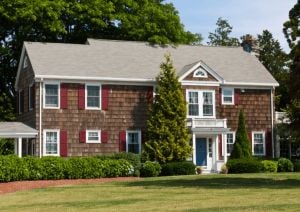 roofing and weaken the integrity of the exterior of the house. It makes the wall covered by the siding susceptible to moisture, rot, and insect infestation. Identifying these potential problem areas will help the owner fix it while it affects only a small area of the wall, preventing the problem from escalating, and saving money.
Type of Siding and Susceptibility
Among the more common siding types, wood is the most susceptible to moisture damage. If the storm brings with it a large amount of snow or water, the lamination around wood siding may be removed. This exposes the wood to moisture, which in turn will lead to wood rot if the siding is not removed and replaced.
Fiber cement siding, although FCr, is also susceptible to moisture damage. However, the cement that encloses its wood or cellulose fibers allows it to resist moisture better. It only becomes susceptible if this outer covering is compromised.
Extreme cold makes vinyl siding brittle. Many of these vinyl products are said to be able to withstand winds above 120 miles per hour or impacts amounting to 20 pounds of force. Exposure to extreme cold, however, will take away its ability to do so.
Invisible Damage
Damage caused by hail, such as dents in the siding and roof, is not easy to pinpoint. Even severe siding damage cannot easily be identified because lighting and the viewing angle obscures the damage. United Home Experts has extensive experience in identifying hail damage and have assisted their customers in assessing what repairs need to be done to the house’s exterior.
Many siding and roof products have hail damage warranty coverage. The manufacturer can provide an expert assessor to evaluate such damage. It is important to note that even minute damage needs to be repaired. Leaving it alone will in time compromise other parts of the wall and lead to further damage.
After a storm, it is not just the siding that might be damaged but also the wall it covers. Such damage is often difficult to identify because the siding over it may appear untouched. This will also increase the cost of repairs. It should thus be considered when making an estimate.
In Summary
If a house is located where storms occur often, choosing the right siding is very important. In the event there is siding damage caused by hail, wind or moisture, these should be attended to immediately. The aid of an expert like the people at United Home Experts will help with identifying problems not easily seen so they may be repaired accordingly.
There is no doubt that owning a home has several benefits; however, it can also become quite costly, especially if  the homeowner is not utilizing the newest and most efficient technological advancements readily available on the market today. With the recent consumer trend towards making the home more energy efficient, many homeowners might not know that one of the best ways to accomplish this is simply by installing energy efficient windows throughout the home. This simple fix can easily save a homeowner hundreds of dollars a year on utility bills.
Keeping the Home Cool During Summer and Warm in Winter
Many older homes come standard with single-pane, non-energy efficient windows. These types of windows allow heat to escape and cold to penetrate, making a home unbearable during the summer and uncomfortable during winter. By installing windows that are energy efficient, it takes less to keep the home warm because no heat is escaping, and these windows also work to keep the cold weather from penetrating the interior. This effectively lowers the possibility of the homeowner falling victim to unnecessarily high heating and cooling bills. This is especially true of homeowners living in the Eastern New England area, where it is fairly typical to experience more pronounced changes in temperature throughout the year.
Worth the Cost of Investment
Though at first glance it might seem like a high out-of-pocket expense, the benefits of installing energy-efficient windows far outweigh the initial cost of installation. In addition to reducing the burden of utility bills each month, installing these windows will also raise the effective value of the home itself “an increase that will grow exponentially over the years. This makes installing windows that are energy efficient the smart choice no matter how a savvy homeowner looks at it.
Getting Help from the Professionals
Interested in updating the windows but not sure where to start? The professionals at United Home Experts can help! Not only do we specialize in servicing customers throughout the Eastern New England region, but we also employ experienced and caring professionals who can come out to the house to explain the process and sit down with the homeowner to discuss costs. With the summer heat still going strong and the cold winter months quickly approaching, now is the time to make the choice to update the home and install windows that are energy efficient.
Fiber cement siding is an exterior home option that offers homeowners a durable and attractive home siding. Homeowners looking to replace their existing siding or needing to add siding to their home for the first time should consider using this option.
Fiber cement is extremely durable and long-lasting. Fiber cement is formed through autoclaving, which bonds materials such as cement, sand and cellulose together using extreme steaming. Fiber cement is one of the most resistant and durable siding options for a home. This siding is insect resistant, fire resistant with a Class 1 (A) fire rating, and resistant to moisture. 
Although fiber cement is very durable, part of its make up are wood fibers, which in fact absorb water leading to some of the same issues that wood siding has.
The issues that fiber cement has are typically swelling, crumbling,delamination between layers, and loss of paint adhesion. This is a situation where the positives of the product may outweigh the negatives depending on homeowners’ preference or needs.
Despite the problems, fiber cement siding is also a very attractive alternative to traditional home exterior options. The finish for this type of siding is applied by the manufacturer or factory, and does not require painting, staining or finishing by the homeowner. The finishing options are numerous including a wide range of color options. As well, this type of siding can come with other finishes to give it the appearance of stucco, conventional siding, shingles and wood grain. Homeowners have a vast selection of appearance and color options when selecting fiber cement.
Fiber cement is also an economical choice for a homeowner. Due to its durability, it requires very minimal  maintenance. As well, due to the durability and longevity of the finish the time between the next paint job on fiber cement will be 10-15 years. This siding is ultraviolet resistant as well. It also adds additional insulation to a home over other exterior covering options. Fiber cement siding cost and maintenance costs remain low due to its ability to withstand nature and its limited required maintenance.
Fiber cement home exterior siding offers homeowners an option that is extremely durable and hearty. As well, this siding is flexible in that homeowners have numerous appearance options to allow them to select the appearance that works best for their aesthetic. Fiber cement is also easily maintainable and carries low maintenance costs and low requirement for repair and upkeep. Overall, fiber cement is an excellent siding option for homeowners.
Asbestos was used for its insulating and fire-resistant properties for many decades, but since the late 1970s has been phased out as a material used in homes in the U.S. due to increased awareness of its dangers. Though residential homes are no longer made with asbestos-containing materials, many homes built prior to the late 1970s, and in some cases homes built after 1980 due to unscrupulous contractors, are likely to contain asbestos.
Asbestos comes from fibrous minerals found in the earth’s crust, with strands of microscopic width, and which when breathed in may get lodged into the lungs and respiratory tract, leading to serious illnesses such as lung cancer, mesothelioma and asbestosis.
If a homeowner suspects that his or her home siding contains asbestos,
the homeowner may contact certified professionals to test the siding to determine if that is the case. Generally, if one is to discover that asbestos has been used in one’s home for siding, it should not be a cause for panic if the material is still in good shape. It may even be best to leave the material alone rather than to tamper with or remove it depending on the condition. The risks with asbestos-containing products arise when the material breaks apart or deteriorates, which may allow fibers to be released into the air and breathed in by occupants or visitors to the home. 
If the asbestos siding is breaking or cracking apart, it is important that the siding be dealt with as quickly as possible to minimize potential health risks from exposure. Regulations on asbestos abatement vary from state to state, though due to the risk of improperly handling asbestos from lack of training, it is highly recommended that one hire certified professionals such as ourselves, United Home Experts, for asbestos removal. Certified professionals have specialized equipment which protects them from airborne fibers.
In asbestos abatement a water-sprayer is used, with the water mixed with detergent, to wet the asbestos in a manner such that fibers are less likely to go airborne during removal. Special waste disposal bags are used to ensure that fibers do not escape into the air, and duct tape is used to seal these bags once they are filled. Plastic strips are placed along the house to mark the hazardous workspace that others must avoid, and stickers may be used to indicate areas with asbestos. Among the equipment worn by certified professionals to remove asbestos are goggles, a respirator, a disposable coverall, rubber gloves taped to sleeves, and rubber boots. The coverall and gloves are disposed of in a safe manner once the asbestos is removed. One must make sure, while work on asbestos removal is taking place, not to allow family, guests or pets to get in or near work areas or equipment which may contain asbestos or trace amounts of it.
We at United Home Experts will give you the best recommendation on how to deal with asbestos siding if you desire to paint your home or update the siding.
Homeowners here in the Northeast have a wide range of sidings to choose from, so why choose vinyl? There are many advantages to vinyl siding. Choice of colors, patterns, ease of installation and low maintenance are just some of the advantages of vinyl. Cost can be another, both the cost of the physical siding itself as well as the cost of installing it. Many homeowners simply like the way that vinyl siding looks on their house.
Choosing the right vinyl siding manufacturer is actually a difficult and ultimately thankless task. The reason is, 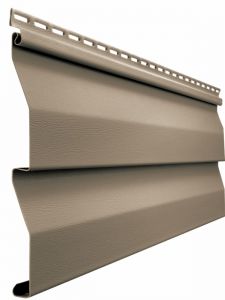 many different name-brand sidings turn out to be made by the same manufacturer, so there is really little or no difference between many brands.
So the choice of manufacturer is not as important as a recommendation by another homeowner or even by an independent contractor or installer who does not receive a kick-back from one particular manufacturer for pushing a specific brand.
More important when choosing which vinyl siding is right for the home as well as the budget is understanding that “broadly speaking” there are two basic types of vinyl siding to choose from.
There is value vinyl and there is premium vinyl. Understanding the difference between these two basic types of vinyl siding is far more important than choosing a siding based on a manufacturer.
As the name implies, value vinyl is the least expensive. In this case the least expensive is not necessarily the inferior choice. Value vinyl has many things to recommend it.
While it is true that value vinyl is generally thinner than premium vinyl (the thinnest vinyl is builder’s grade at approximately 35mm thick) what sets the two types apart, primarily, is aesthetics.
Value vinyl is smooth, with no grain” or pattern impressed into the vinyl. This is not necessarily a bad thing. Smooth vinyl does not have divots and textures to hold dust and dirt, so value vinyl often looks cleaner than the more expensive vinyl siding. And because of its smooth surface, value vinyl is easy to clean with simply a garden hose, a mild soap and a soft cloth or sponge.
The primary drawback to value vinyl here in the Northeast is its thickness. The thinner vinyl provides less protection against harsh weather. However, the insulation under the vinyl can more than make up for this, providing adequate warmth during the winter and a cool interior during the summer months.
Of course, the thinner vinyl generally does not last as long as the thicker, premium-grade vinyl siding. But even with the limited” warranty for the value grades of vinyl, a cost-conscious value vinyl can still protect a home here in the Northeast for as long as 20 years in some cases.
Therefore, part of the decision-making equation when choosing between value vinyl and premium vinyl might  include the length of time one plans to live in a home, as well as the severity of both winter cold and summer heat.
The heavier and textured premium vinyl generally comes with a longer warranty and the variety of textures can add a certain ambiance to a home that the value vinyl simply cannot match. Some premium vinyl siding can come with a lifetime warranty, and all premium vinyl sidings provide long-term protection.
Regardless of the type of siding chosen or the manufacturer, vinyl siding offers many advantages here in the northeast. Vinyl is easy to clean and it provides superior insulating value along with improved energy consumption. Vinyl siding resists insects, cracking, damage from flying objects and it even provides resistance to fire. It also never needs painting.
Talk to a dependable company such as United Home Experts to determine whether value vinyl or premium vinyl is the best choice, and then ” and only then ” discuss the manufacturers. Because when it comes to vinyl siding, choosing between the different vinyl siding manufacturers may not be as important as simply choosing between value and premium-grade siding.
When considering siding for a home, the first things to think about are appearance and strength. While most siding can resist weather, two types of siding stand out as long-lasting: vinyl siding and brick siding. They are both great choices for durability and beauty.
Vinyl is a good home siding that requires little maintenance—it just needs hosing off a few times a year. There is no need to paint, as the vinyl comes in a rainbow of colors, the darker colors preserved with anti-fade agents. It is also available in a wide variety of styles and comes with a lifetime warranty. This type of siding can also help reduce heating and cooling bills by providing an insulating layer.
Not very difficult to install for the homeowner, vinyl costs less than brick and has many other advantages. Vinyl can be removed and reinstalled elsewhere. The homeowner can add a room, or just change a look fairly easily, as this siding is screwed on, then locked with the panel below it to seal it from the weather.
That said, vinyl siding is vinyl. While strong and resistant to mild weather, it will not have the durability of brick. The lifetime warranty can vary, from the life of the product to the life of the consumer. There is no legal definition, so reading small print is highly recommended. Expect it to last about 20 to 25 years.
Brick can give a rustic look to a home and can be beautiful for decades. Brick is usually installed as a veneer, not a part of the structure, and is water-permeable. This siding needs to be installed over a waterproof membrane. The disadvantage to brick is that it is pricey, especially if installed correctly. Brick is not so easily moved from place to place, and can add significantly to the price of a remodeling job. It is also not a job for the homeowner. Brick panels are heavy and are connected with portland cement, a mortar made of lime, sand, and water.
Brick is considered permanent, but it will deteriorate, especially at joints. Repointing, replacing the damaged mortar, may need to  be done eventually. If installed well, however, that will not need to be done for many years.
Brick siding and vinyl are at opposite ends of the cost spectrum, but both can increase the value and beauty of a home for years.

Replacing vinyl windows is not something that people think as an item for home improvement. That is, of course, unless one has owned the house for more than a few years. Like all other parts of a house exposed to the elements, windows deteriorate. When the time comes to replace it, there are several important things to keep in mind.
The Whole Window Often Does Not Need Replacement
More often than not, the window’s frame does not need to be replaced. It is the sturdiest part of the window and, if properly installed, will last a long time. It is also the most difficult to remove. Leaks, which can potentially raise a home’s energy cost, can easily be remedied by making repairs instead of prematurely “ripping out” the window.
The glass panels and the moving parts of the window are what commonly gets worn out or damaged. Simply replacing these with new ones will save money. Vinyl can also be repainted, as the color scheme becomes boring or faded.
Whole Window Replacement Is Expensive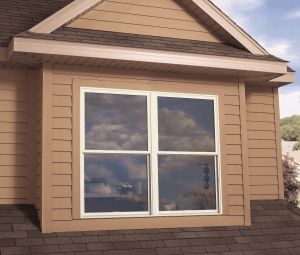
Although vinyl is an inexpensive material, the job of taking out an old window and putting a new one in place is costly. Damage to the part of the wall to which the old window was attached has to be repaired first before it can properly support a new one. If the new window is different from the old one in size, shape, or type, then the hole should be adjusted accordingly.
Some people hire a handyman to save on the labor cost. Unfortunately, their expertise is limited as these people are really generalists instead of specialists who have extensive experience in removing old vinyl windows and replacing them with new ones. United Home Experts is one such specialist in the New England area. Their long experience in window installation ensures that potential problems are prevented.
Replacing A Window Is Not A Do-It-Yourself Job
Although many people pride themselves in their ability to learn something new quickly, a homeowner will basically be experimenting most of the time. This is not the case for a professional contractor who will know all that need to be done and who is experienced enough to be able to do the job quickly with pleasing results.
The Professional Advantage
Replacing old windows is a process that entails many steps. There are several things that could go wrong during the process if an amateur handles the job. This will lead to more expense because a professional will then need to be hired to solve whatever mistakes were made. Immediately approaching professionals who have had many successful projects, say, United Home Experts, will help the owner enjoy the new window early and with less hassle. For more information about our window replacement services, visit our main window page!
