When it comes to the construction of a house, there are many roofing shapes and styles from which to choose  –  so many, in fact, that many people may not have the time to research all of them. Here is a quick list of 10 of the most popular and functional roof styles. We can install asphalt roof shingles on any of these styles of homes, except flat roofs, we use a different material called EPDM.

ROOF TYPES

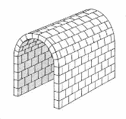
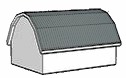
1. ARCHED ROOF

This roofing type is most likely not going to be used for the whole building construction, as they can be costly to install, but can be used as an accent to add tremendous aesthetic value to the home.

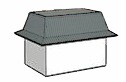
2. BONNET ROOF

This type of roof is also not usually used on a whole house. It can mainly be found gracing the back porch or a decorative veranda. This roof type is similar to both the hip roof and the pyramid roof, which are mentioned below. The main difference is that two of the roof’s sides slope out at an angle.

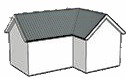
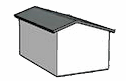
3. CROSS-GABLED ROOF

This roofing type is most likely not going to be used for the whole building construction, as they can be costly to install, but can be used as an accent to add tremendous aesthetic value to the home.


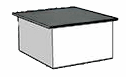
4. FLAT ROOF

This is one of the easiest types of roof to identify because it is very common – and flat, as its name implies. Flat roofs are easier to construct than any other roof type. They are safer to stand on, and they are generally more accessible for maintenance and repairs. The main drawback to this type of roof is that it does require more maintenance than other types, largely because the lack of slope can tend to accumulate debris.

5. GAMBREL ROOF

This type of roof is very similar to the Mansard Roof. This Dutch-inspired type of roof is made up of four slopes, two on each side of the home. The lower slope is a much steeper vertical style than the upper slope, which might be visible from below, but it might not.

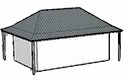
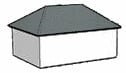
6. HIP ROOF

As mentioned before, this roof is very similar to the bonnet roof. The main difference is that the four sides of the roof meet at a ridge or a flat spot, instead of coming to a point at the top. This enhances the practicality of the roof type.


7. MANSARD ROOF

This type of roof is quite similar to the Gambrel Roof mentioned above, with a few minor differences. The main one is that the Mansard Roof does not have the vertical gable ends and the roof overhanging the facade of the home, as is the case in the Gambrel style. This French style of roof offers extra room for increased living or storage space on the top story of a house.

8. PYRAMID ROOF

True to its name, this roof type is shaped like a pyramid. This is another type of roof that is not practical to use on a whole house, but can add a beautiful decorative touch to small home sections or to corresponding outside structures like garages. angle.

9. SALTBOX ROOF

This is interesting type of roof is asymmetrical in form and features a long pitched roof with one very long side and one very short side. Oftentimes, this results in a house that is multi-storied in the sense that one side of the construction is only one story, while the other side of the building features two stories.


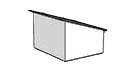
10. SKILLION ROOF

This roof type has one single sloping roof surface. It looks like one half of a triangular roof, and it can be compared to a flat roof whose roof sides have been inclined just slightly. It is not often used in full home construction but can often be seen as a special roofing option for multi-level homes

For project examples and more detailed information about different roofing shapes and styles when determining which ones might best suit their needs, homeowners should contact the professionals at United Home Experts.

According to architectural practices, “transom” is a term that is given to any transverse horizontal structural bar or beam. It is also used to describe a crosspiece that separates a door from the window located above it.

Transom windows, also known as transom lights or fanlights, are smaller-sized windows that are usually hinged and set above a doorframe or on a particularly high area of a wall. They have been used in architectural constructions for a very long time. The first were used to decorate early Gothic churches. These windows were unglazed windows located directly in the belfry. They also took the form of spire lights, where they were thought to be necessary to strengthen the overall church wall construction.

Toward the end of the Gothic period in architecture, it became common to include these types of windows in the during (6)-resized-600designs of all structures, including residences and businesses. They were very popular in building construction before the advent of central air because buildings with these windows stayed cooler and more comfortable in the hot summer months than buildings without them.

Today, these window types are highly prized in a variety of architectural settings for the enhanced cross-ventilation they provide while at the same time maintaining an individual’s security and privacy. There are many different types of transom windows that are available on the market today. Here are descriptions of just a few.

Paneled Glass

This type of transom window is built with a frame that is paneled to create a symmetrical pattern or design similar to a grid. These windows are elegant, simple pieces that can be affixed by hinging either at the base or the top of the frame, or on both frame sides. The glass panels that make up this type of transom are almost always divided by vertical strips of metal or wood, but sometimes larger paneled glass transoms include horizontal pieces of wood.

Solid Window

In contrast to the multi-paneled transom, some transoms feature just one piece of glass inside a solid, sturdy frame. Like the paneled transoms style, these solid windows can be affixed or hinged at the frame’s top, bottom or both sides. These solid transoms often feature a heavy piece of frosted, brightly colored or intricately etched glass. They might also contain a piece of glass that is highly embellished for enhanced beauty.

Fanned Window

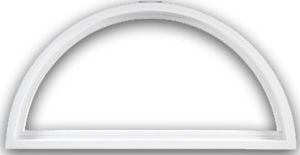
These transoms are arched, fan-shaped or semicircular and are often called “fanlights” because they resembleFanTransomWindows open decorative fans. This type of window is either fixed in place or hinged at the base to allow the frame to swing from one direction to the other. This style of transom window is usually designed as much for decorative beauty as it is for practicality.

Major Brand Names

Most transom windows that are sold in the Northeast are constructed with vinyl and are manufactured by Pella. There are transoms available in other brand names, but Pella windows are some of the best.

Transoms can add beauty and functionality to any home or office building. To learn more about transom window styles and to see which one might be best for specific architectural needs, individuals should contact the professionals at United Home Experts.

TransomWindows

Transom windows can be installed by themselves (as interior windows), or as decorations above doors and cased openings.  Standard carpentry tools such as nails and hammers are needed, as well as a few simple components to frame the transom.

In addition to the cased opening components, it is necessary to have adequate material for the fabrication of a jamb frame, a stop molding (for holding the sash in place), and a mullion (for installing the transom above your door).

Any homeowner who is looking to add both beauty and functionality to his or her home should consider installing transom windows. Most people won’t have any idea of where to start, so here are the basic instructions for completing transom window installation above a door.

Those that are really looking to take on this project themselves should first get a detailed set of instructions from the window manufacturers. This set of instructions is strictly to get an idea of the process. We are not responsible for any accidents, warranty voids or mishandling. We highly recommend allowing professionals, like ourselves, to replacing your windows. We offer the best warranties and coverage, aside from manufacturers, for replacement windows that are available to homeowners in the New England area.

Step 1. The first thing that is needed is a calculation of the final opening width. Based on this measurement, a transom jamb frame will need to be measured to fit that same width (about a quarter inch bigger on all side than the actual dimension of the door slab). This frame will be made using flat jamb material. The transom sash might need to be cut down slightly in order to fit inside the frame of the jamb.

Step 2. The transom sash should be centered inside the jamb frame and fastened to it. It is often easier to do this while lying on a flat surface to inhibit twisting during assembly. Temporary spacer blocks should be used to hold the transom sash in place until the stop molding can be applied. It is recommended that spacing nails or screws be fastened every eight to twelve inches.

Step 3. The stop molding needs to be cut and assembled on both sides of the sash to provide a completed look forduring (6)-resized-600 your transom. This has the added advantage of covering any gaps that might exist between the jamb frame and the sash.  Some common trim profiles that are used for this purpose include cove mold, quarter round, and square stop. Install shorter (vertical) stop pieces first.  This will allow for the bending of longer pieces into place to obtain a tight fit.

Step 4. The transom unit (the assembled sash and frame) should now be fastened on top of the cased opening or door.  To accomplish this, nail the transom jamb to the head jamb of the door (or cased opening) beneath it.

Step 5. Once everything is assembled, it will be necessary to measure the door and transom together as one unit.  Cut the casing (the two legs and the one header) and install on one complete side of the transom.  Then case the other side of the assembled door / transom after installing the door in the rough opening.  If the transom and the door are assembled directly at the foot of the opening, it is much easier to secure the door in its final position.

Step 6. After applying the casing, complete the transom trimming process by installing the mullion between the jamb frame and the door head jamb.  Adjust the mull detail by installing spacer blocks between the jambs and using a wide mullion to cover the gap.

Step 7. Next, the assembled unit (cased on one side) will need to be placed into the rough opening by plumbing and tacking.  Then shim and nail behind the jamb on the open, uncased, side.

Step 8. After shimming, the uncased side should be measured, cut, and completed.

Step 9. Repeat Step 6 for the unfinished side of the transom.

The process for installing a transom over a cased opening or by itself is completed in the exact same way (without the doors).

These are the basic steps one would take to install a window. Of course, after reading these instructions, some homeowners may prefer toleave the task to the professionals. United Home Experts can help; the company specializes in window installation and a variety of other home improvement projects for those living in the Eastern New England area.

Preparing a surface for paint makes the difference between a quality, lasting exterior and a shoddy one.  The result of an unattractive, short-lived painted exterior is not the fault of the paint itself but rather the failure of the paint to adhere to the surface.  The paint had no chance of adhesion because it was applied over a dirty, greasy, peeling surface.

Before starting preparation, a major consideration in preparing and painting an exterior surface is when the work should be done.  When painting an exterior, the temperature of the surface to be painted should be greater than 50°F and less than 90°F.  This means that homeowners in areas of the country such as New England have a rather slim window of opportunity to carry out the exterior paint preparation and repainting project.

Preparing the Environment for Exterior Paint Preparation

Surrounding landscape plantings, barbecue grills and other nearby objects must be protected from paint chips and PaintPreparationspatters as well as the chemicals in cleaning solutions and paint strippers:

  1. Turn off all electrical power and gas fuel suppliers that connect to outside objects.
  2. Cover them with canvas.
  3. Pull any tall bushes near the home away from the structure with ties.   Stake the ties so that the foliage does not touch any exterior surface.
  4. Remove exterior fixtures such as lighting, mailboxes and shutters.
  5. Patch, repair and repaint any trim that is to be reaffixed to the home’s exterior when the new paint is dry.

Removing Loose Paint

This chore will always include hand scraping and sanding.  A power washer can also be used, but should only be PaintScrapeoperated by an experienced operator, as this tool can cause serious damage to an exterior if misused.

 On a dry surface, beginning with the loosest part of the peeling paint, scrape it off using one tool or a combination of a paint scraper, putty knife, heat gun, sandpaper and sanding block.  On wood siding in particular, careful attention must be paid when scraping with any tool to avoid gouging the wood.

Sanding the Surface

Once all loose paint is gone, the surface must be sanded wherever the paint was removed, blending the harder edges with the sandpaper to make the surface as smooth as possible.

Cleaning the Surface

Now that all the scraping, sanding and environmental protection has taken place, it is time to thoroughly wash PowerWashingthe exterior.

Remove screens, storm doors and windows and whatever is not to be painted.

With a solution of TSP and water, thoroughly wash the exterior with either a power washer set to the lowest pressure or a hose with a car wash brush attachment. Work from the top down.  Rinse each cleansed section as completed with clean water.

At this point, homeowners residing in the New England states with the short span of weather conditions conducive to the proper paint preparation and repainting might want to consider getting help for this extensive project.  The professional, experienced home remodeling team at United Home Experts has been doing quality work in the New England area to the satisfaction of many homeowners.

The Final Paint Preparation Stage:  Drying and Caulking

  • If the paint to be applied is latex, allow the exterior to dry at least a day.
  • If it is an oil-based paint, allow at least a week before painting.
  • Caulk any gaps around windows, doors, between siding, moldings; anywhere moisture can seep in.

With completion of these steps in paint preparation, the exterior paint that is finally applied will have a smooth, attractive appearance and will keep that look for many years with minimal maintenance.

PaintedRoom

When it comes to interior decorating, one of the most important questions any homeowner or designer can ask is, “How should I paint the inside of my home?” Indoor paint adds depth and character to walls and ceilings and changes the atmosphere of any overall living or working space. For this reason, it is important to know how to select the best indoor paint for your purposes.

Use flat (matte) paint for ceilings. One of the best reasons to use flat paint is that it readily adheres to rough surfaces. Because it adheres so well and is non-reflective, it tends to minimize imperfections, whereas glossy paints highlight imperfections.

Have a textured ceiling that needs to be covered over? Flat paint can help with that. It actually decreases the amount of texture that is present, giving a smooth, finished look than can instantly update a room’s style.

It should be noted that flat paint is very hard to clean and tends to attract dirt and stains more than glossier paints do. Flat paint, then, is perfect for use on ceilings because stains are less likely to occur there.

Satin and eggshell paint is optimal for dens, adult bedrooms and other areas children don’t usually frequent. Both swpaintcansatin and eggshell paints are good choices for these areas because they are much easier to clean than the matte version of indoor paint. Satin finish works best on walls because it is more reflective, while eggshell works better on ceilings because it does not emit as much glare.

Eggshell paint is slightly more difficult to clean than satin paint, and it is not as readily available. It should be noted that neither of these types of paint will hold up to any serious scrubbing.

Semi-gloss paint for family rooms, children’s bedrooms, and window and doorway trims. This type of paint is perfect for very high traffic areas because it is very resistant to dirt, grease, and grime. It is also very easy to clean, more durable, and comes in more color varieties than the other types of indoor paint; however it also costs more than the other types, with the exception of high-gloss paint, which is the most duration homeexpensive paint type as well as the most difficult to find.

Gloss paint for bathrooms, kitchens, and other highly humid areas. This paint is very useful in areas that are prone to moisture and staining. It is even more durable, dirt-resistant, and easy to clean than its semi-gloss cousin. It does, however, tend to show more imperfections than any other of the indoor paint types, so walls should be very carefully sanded down before the paint is applied.

All of these paints come in a variety of colors, although some (especially the glossier paints) tend to be offered in more color choices than others (especially the flat paint).  Sherwin-Williams has a wide variety of all of these types of paint, available at a great value to the consumer. Whether the desired paint type or paint color is decided upon first, individuals should consult with the professionals at United Home Experts for more ujwkmam6detailed recommendations.

gallery01-resized-600

A correct and thorough preparation of a home’s interior will help ensure a quality, long-lasting paint job.  Proper paint preparation will also help avoid messes and mistakes that could be time-consuming and expensive to clean up.  Interior painting preparation is actually more tedious and takes more time than applying the paint. For good advice and a quote on contracting the job out, homeowners in the New England states of New Hampshire, Massachusetts, Connecticut and Rhode Island can depend on the professionals at United Home Experts. Following are some of their useful tips for interior paint preparation.

The first step in interior paint preparation is to clear the room of light furniture and any decorative items.  Remove everything from the walls, including heating vent covers and electrical faceplates.  Cover switches and receptacles with painters’ tape.  It is also beneficial to remove hardware such as knobs, handles and locks from doors and windows, or at least mask them off with painters’ tape.

Heavy furniture should be pushed into the center of the room and covered with a plastic sheet, with a canvas SWPaintCandrop-cloth on top of that.  Should a light fixture be immovable, wrap it carefully with plastic.  A garbage bag serves this purpose well.

Wallpaper in good condition can be painted over.  Wallpaper that is torn or pulling away from the wall must be removed.  The best way to remove wallpaper is the good, old-fashioned method of peeling off all possible paper by hand.  Any remaining shreds and paste are then sponged or mopped with very hot water until every last bit is removed.

The surface can now be prepared for the paint by a thorough sanding to ensure the wall is free of any specks of paper or paste.  Be sure to dust off any traces of the sanding as well.

Like the loose wallpaper, paint that is chipped or peeling must also be completely scraped off.  The trick here is to PaintPreparationremove the paint without gouging the wall.  A scraper with edges that can be sharpened and a stiff wire brush are good tools to use here.

If the finish on any woodwork is in poor condition, it is best to remove the paint or stain altogether with paint-stripping gel before applying new paint or stain.

Small holes and cracks in the wall from denting or nail holes must be puttied over to enable a smooth surface.  Larger holes can be made smooth with self-adhering mesh cut wider than the hole.  To do this, cut two pieces and center the first piece over the hole.  Press it down.  Center the second piece over the hole to form an X with the first piece and again press on it.  Cover the mesh completely with putty using a putty knife.  When dry, sand the area and apply primer.

Use fine-grain sandpaper to smooth the entire surface for paint preparation.  Sanding also finely roughens the surface, allowing better paint adherence.

The final step in interior paint preparation is to vacuum the rooms to be painted and dust the surfaces of walls, ceilings and trim.  If it is a kitchen or bathroom that is being repainted, the walls must be cleaned of all grease and soap scum both before and after sanding.

Repainting an interior space can make a huge difference in its appearance and livability.  This is a big project, but the results can be amazing.  A quality paint job will also add value to the home.  Homeowners considering selling their home should keep this in mind.

wood-like

There is a distinct difference between paint and wood stain in theirchemical makeup as well as the circumstances under which each should be used.  There are also at least as many differences in wood stain types as there are in types of paint.  One simple, general rule for choosing between stain and paint for covering either an exterior or interior surface is if the wood is rough-sawn, stain it; if smooth, paint it.

Like paint, wood stain can be oil-based or water-based.  Unlike paint, stain also comes in gel form.  The decision wood scapeson which one to use depends on the wood species to be stained, the space in which the work will be accomplished, and how important environmental friendliness is to the homeowner.

Oil-Based Stain

This is easy to work with as it is slow to dry.  It does require that the staining be done in a well ventilated area if the stain application is taking place in an interior space, as the vapors can be hazardous as well as flammable.

Water-Based Stain

These are more environmentally friendly and do not diffuse harmful vapors into the surroundings.  The stain color duration homeis added to a water-based solution instead of oil.  It is not nearly as flammable as the oil-based stain.  Unlike the oil-based stain, though, the water-based stain dries very quickly making it more difficult to use.  Because of the rapid drying once on the wood surface, it is not easy to achieve an even finish.  Water-based stains actually raise the wood’s grain, roughening up the surface.  One way to smooth the grain is to wash the wood with water, let it dry and sand it smooth before the water-based stain is applied.

Gel Stain

Not everyone knows about these relative newcomers to the stain and paint market.  The consistency of the gel stain is like a thick paste, so it cannot penetrate wood like the oil- and water-based stain products.  Gel stain lies on top of the wood in an even layer.  It is good for woods that have an uneven grain such as maple, where a penetrating stain might make the wood appear blotchy.  However, the gel stain will not allow the natural wood grain to show through.

Paint

Modern paints come in two varieties: oil-based and latex.  Oil-based paint is preferred for interior spaces like swpaintcankitchens and bathrooms as dirt and grease can be easily wiped off.  Latex is generally preferred for exterior painting because it weathers better than oil-based paint and is more resistant to fading and chalking.  Latex paint is preferred for all climates, but particularly for harsh climates found in all parts of the country.  Oil paint, however, is a good choice for repainting an exterior where old, brittle paint is already present on the surface of the structure.  This type of situation exists in areas such as New England, where historic homes are cherished and preserved.

The New England states of Rhode Island, Massachusetts and New Hampshire are not only rife with stately historic homes but are also subject to some of the harshest weather anywhere in the country. Homeowners in these states should consult with the professionals at United Home Experts to guide them to the proper choice.

Choosing between wood stain and paint is a complex issue.  The decision depends on so many factors that conducting a thorough research involving contacting United Home Experts, home improvement stores and retail paint outlets for more information and advice before beginning a major painting or staining project would serve the homeowner well.

Vinyl-BlogPhoto17Shakes-resized-600

The homeowner considering residing a home is faced with more than half a dozen choices as to the material that should be used.  The decision that the homeowner ultimately makes is an important one because a home is probably the biggest investment a person makes, and the choice of a siding which will protect that home that investment is one of the most important decisions that a homeowner is faced with.

This article does not attempt to sell the homeowner any particular type of home siding.  The purpose of this article is merely to provide the homeowner with as much unbiased information as possible about one particular type of siding vinyl siding so that the homeowner can include this information when making an informed decision.  So here are vinyl siding pros and cons.

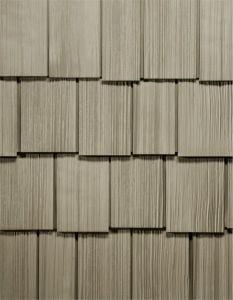
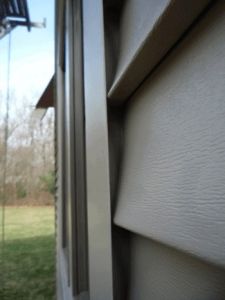
Vinyl siding has made huge strides in just the past few years.  Many old notions of vinyl must be discarded and the cedarimpressions-resized-600homeowner needs to come to this discussion with an uncluttered perspective.  From an aesthetics standpoint, today’s vinyl mimics the look of real wood much more realistically than the faux-wood vinyl panels of just a few years ago.  One of the reasons some people disliked the vinyl panels of even ten years ago was the fact that the panels had a seam in them that destroyed the illusion that they might be wood.  Today’s vinyl has no seams and the texture of the panels looks more like wood than ever.

The true key to vinyl is the thickness of the siding.  Many homeowners are unaware that vinyl comes in at least three gauges or thicknesses, or that the gauge of the siding they choose determines how long their siding will last.  Obviously, the thicker the vinyl is, the thicker the gauge and the more the siding will cost.

The vinyl sold in many home centers is 40 to 45 gauge size.  This is adequate and can last 25 years or more in many climates.  However, for the homeowner who wants true durability and a siding that can last 40 years or more with little or no maintenance, a 55-gauge (.55 inch thick) siding is recommended.

Vinyl panels generally come fully painted, with the color infused with the vinyl itself so it cannot flake or chip off.  Homeowners can choose from a wide palette of colors, matching almost any color scheme the homeowner can come up with.  If just the right shade is not available in a pre-colored vinyl panel, vinyl siding can be painted any color that the homeowner chooses.

One of the primary reasons that vinyl has become “king” in the house siding world is that once the vinyl is installed, there is virtually no maintenance to perform for the next 30 or 40 years.

That is not to say that a vinyl panel attached to a home today will look just as good 40 years from now as it does now it will not, but if a homeowner does nothing to a 55-gauge panel for forty years, it could still do its job of keeping the home dry and safe in many climates.  And that is something.

Of course, to keep a home’s vinyl siding looking good and relatively new, the siding will need to be washed at least vinyl-blogphoto01-resized-600once per year and painted every eight to 10 years.  Under the glare of the sun, the colors infused into vinyl panels do fade with time, so without a certain amount of care, such as occasionally repainting, vinyl siding does tend to look old after a few years.

Another point to keep in mind is cost.  Vinyl is one of the least expensive sidings a homeowner can buy.  Not only are the initial costs less than virtually any other siding, but the installation is also fast and inexpensive as well due to vinyl’s lightweight and interlocking design.

Vinyl does have its drawbacks, however, and homeowners need to be aware of them.  For one thing, vinyl dents rather easily, even the heavier gauges.  An errant baseball, hail, or even a power wash can dent vinyl, and very often the dents do not pop back out no matter what the homeowner does.

If a panel is dented or needs to be replaced for any other reason, it can be extremely difficult, time-consuming and expensive.  Vinyl panels overlap, and because they are attached in an interlocking pattern, they can be extremely difficult to remove and it can be almost impossible to insert a new piece of siding.

Not only that but matching the color of an existing panel with a new panel can be virtually impossible unless the damaged panel is almost new.  The reason for this is that the colors permeated into vinyl panels fade over time, making a newly inserted panel stand out.  Also, it can happen that a manufacturer will cease manufacturing a certain color of panel, making it impossible to color-match an older piece of vinyl.

Cold can also be a vinyl killer.  In extremely cold weather, vinyl can become brittle and crack under the least provocation.  Cracks in the siding allow water to seep behind the vinyl and that can cause incalculable damage to the framing of a home.

There can be another problem with cold weather: vinyl does not insulate well.  This problem can be alleviated, at vinyl-blogphoto02-resized-600least to a large degree, by either wrapping the home with an insulating house wrap or putting heavy-duty insulation into each wall cavity before the vinyl is applied.  There is a thin insulating material that can be placed under the vinyl itself, but this does little in the way of actually insulating a home against either cold or heat.  The cost of additional insulation must be calculated into the total price of vinyl siding when making siding comparisons.

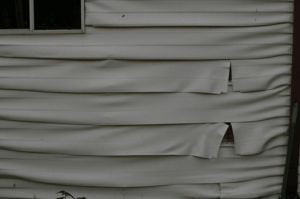
In extreme heat temperatures, vinyl siding can also melt and cause severe problems in locations where irregular weather patterns are the norm.

To sum up, the main advantages of vinyl are its low cost and ease of installation combined with its low maintenance.  Some homeowners are also pleased with the way modern vinyl panels look.  Drawbacks include being easily dented, the difficulty of replacing individual panels, color fading and potential cracking in extremely cold weather.  All of these factors must be weighed carefully against the pros and cons of other types of siding when making a decision as important as installing new siding on a home.

paintrollerwhite-resized-600

Exterior paint is subject to any number of events that can ruin its beauty and effectiveness.  There is good reason to pay strict attention to the preparation, type and application of the exterior painting project.  Paint is the home exterior’s first line of defense against the elements.  The proper surface preparation and paint application are the same regardless of the climate.  However, the type of paint used depends on the weather conditions where the home is situated.  Homeowners seeking advice about repairing damaged exterior paint should contact their local home remodeling contractor.  For many homeowners in Rhode Island, Massachusetts and New Hampshire, United Home Experts has been the go-to choice for their home remodeling needs.

Common causes of damage to the exterior paint include inadequate surface preparation, careless paint application, applying the wrong type of paint and structural problems that allow moisture to accumulate.  Prior to repairing damaged exterior paint, the underlying cause for the damage must be diagnosed and treated to keep it from recurring.  Following are some of the most common maladies befalling an exterior paint job.

Blistering

Blisters happen when water or solvent is trapped beneath the paint.  To eradicate the blister, it must be cut open to determine the culprit.  If there is bare wood under the blister, water caused it.  If there is solvent beneath, it was undoubtedly because the exterior painting took place in direct sunlight.

Should water be the cause of the blistering, the exterior of the home should be thoroughly inspected for loose or missing caulking around windows and doors that may have led to the blistering.

Peeling

Peeling occurs when the paint curls away from the wood.  Probable causes are painting over dirty or wet wood.  It PeelingPaintmay also be due to new paint being applied over loose old paint.
Alligatoring

This affliction is just as it sounds.  It is a condition with a pattern of lines and cracks resembling the skin of an alligator.  It happens when a second coat of paint is applied while the first one is not completely dry.  Alligatoring may also be a result of paint for the first and second coat being of different and incompatible types.

Wrinkling

Wrinkles have a saggy, droopy appearance and are caused by paint being too thickly applied.

Chalkingf

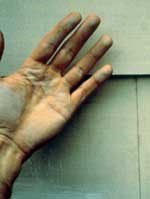
Interestingly, top quality paint is manufactured to chalk up so that in wet weather surface dirt is washed away.  However, chalking where the paint is removed by rubbing the surface indicates an unprimed surface or that the application of poor quality paint.

Repair and necessary supplies

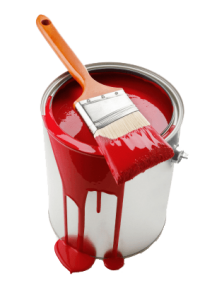
The repair for all of these conditions is the same, with the exception of the fix for blistering paint.  The blistered paint must be scraped and sanded right down to the bare wood before further steps can be taken.  Otherwise, the treatment for the damaged exterior paint is to scrape the paint off the affected areas and sand until smooth.  The area must then be washed with a detergent solution and thoroughly rinsed with water.  When the surface is dry, the primer coat can be applied.  If moisture was the cause of the damage, the primer should be a water-repellent variety.  Finally, a thin coat or two of the recommended,paintbucket high quality paint for the home’s climatic conditions should be carefully applied.

The supplies for the job are simple and include a stiff wire brush or paint scraper, fine and medium grade sandpaper, primer, paint, and paintbrush or roller.

Homeowners everywhere should not put off repairing damaged exterior paint.  The look and protective qualities of a properly painted and flawless exterior are important to the home and to those who dwell within.