
Going Solar? You Might Need A New Roof
Answering Common Questions
UNITED HOME EXPERTS | OCTOBER 18, 2024

Answering Common Questions
UNITED HOME EXPERTS | OCTOBER 18, 2024

This article was proudly created in collaboration with our partners at New England Clean Energy, one of the leading solar companies in New England. If you’re considering solar panels for your home, NECE offers top-tier expertise and service to help you make the switch to clean, renewable energy.
Going solar but wondering if your roof will stand up for the longevity of your solar panels?
Have you considered a few of these questions? If not, take five minutes to equip yourself with the best information on preparing your roof for solar panels.
Roofs typically last 15-20 years, and solar panels last about 25 years.
One important thing to know is that if you have repaired your roof, the repair may fail. If any issues arise with the roof and the solar panels have already been installed, the panels would need to be removed and placed back on later.
This process will take time and coordination and be associated with a cost.
So, what factors should you consider when evaluating whether or not to replace your roof before going solar?
The age of your roof is a crucial factor to consider when planning to install solar panels. If your roof is older than 5 years, it is important to assess its condition before proceeding with solar panel installation. An older roof may have diminished structural integrity or potential wear and tear that could affect its ability to support solar panels effectively.
If you notice any premature wear and tear.
Assessing the current condition of your roof is essential before installing solar panels.
Determine if there are any existing problems, such as leaks, damaged shingles, or structural issues. Additionally, consider whether any repairs or maintenance has been performed on the roof in the past. Previous repairs are usually temporary solutions to a longer-term problem, as the roof’s integrity can be compromised.
Identifying and addressing these issues beforehand can prevent complications during the solar panel installation and ensure that your roof is in optimal condition to support the new system.
Addressing any existing problems will help avoid potential future disruptions and additional costs associated with solar panel removal and reinstallation.
If your roof has existing issues, it may be necessary to remove the solar panels to address and repair these problems effectively. Once the roof repairs are completed, the panels will need to be reinstalled. This process involves additional time and expense, as the panels must be carefully removed, stored, and then reattached once the roof is fixed.
Therefore, it’s crucial to resolve any roofing issues before installing solar panels to avoid the inconvenience and costs associated with having to take the panels off and reinstall them later.
Proper planning and maintenance can ensure a smoother and more cost-effective solar installation.
4. Costs and Timeframe:
When planning for solar panel installation, it’s important to consider the costs associated with removing and reinstalling the panels, especially if roofing issues arise. This process can be time-consuming and costly, involving labor and potential disruptions to your solar system’s operation.
Panel removal and reinstallation require careful handling to avoid damage, and the overall time frame for these activities should be factored into your planning. Understanding these costs and scheduling requirements ahead of time will help you make informed decisions and ensure a smoother integration of your solar system with your roofing needs.
When looking at a roof, some signs may be visible that indicate problems with its health.
At the same time, there could also be signs that aren’t very apparent easily. Some visible signs include missing shingles that are bowing. Some houses built in the 1700s have rafters that were placed far apart. This can cause sagging, and solar panels cannot be placed unless reinforced.
When evaluating whether your roof can support the weight of solar panels, it’s crucial to consider both visible and non-visible signs of potential issues. Visible signs, such as significant rot or noticeable bowing, can indicate that your roof may not be structurally sound enough to handle the additional weight of solar panels. These issues can compromise the roof’s integrity and its ability to hold the panels securely.
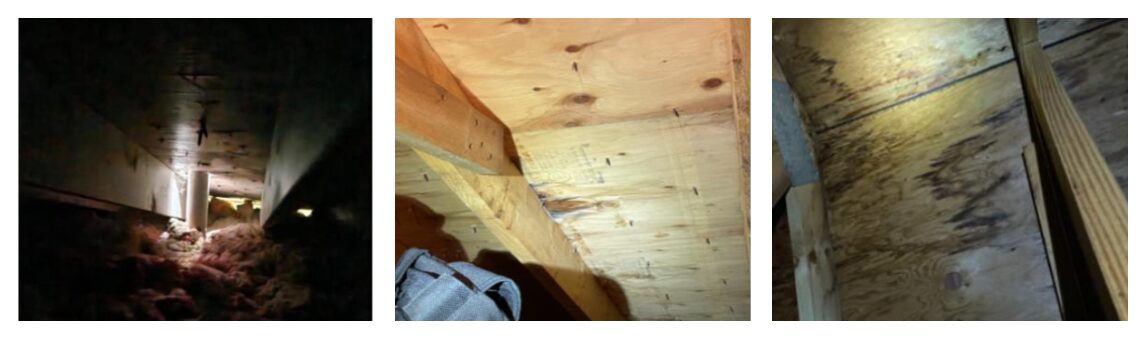
Always check the attic for clues about the roof’s condition.
Non-visible signs are equally important in assessing your roof’s health. Always check the attic for clues about the roof’s condition.
For instance, light streaming through the attic suggests that the roof flashing may not be properly installed or has deteriorated, which should not be visible through the wood. Discoloration in the wood, such as dark marks or signs of water damage, can indicate pre-rot conditions. Weak spots around chimneys, skylights, and pipe vents are common areas where issues can arise. Additionally, inspecting the outside shingles for mold—black or white—can reveal rotting or damage that may compromise the roof’s ability to support solar panels.
In addition to visual inspections, an engineering assessment is crucial in determining whether your roof can support solar panels. Older roofs, particularly those in older homes with widely spaced rafters, may experience sagging and require reinforcement before solar installation.
If substantial wear or structural weaknesses are identified, the roof may need reinforcement to accommodate the panels safely.
Next Steps and Recommendations:
If you have concerns about your roof’s structural integrity, a solar professional can assess the situation and provide guidance on necessary reinforcements. They will evaluate what modifications are needed to ensure your roof can handle the weight of the solar panel system.
Additionally, it is advisable to consult with a structural engineer for a more detailed evaluation and recommendations to address any underlying issues comprehensively.
If your roof cannot support the weight of solar panels, several serious issues can arise. One significant consequence is the potential for leaks. The added weight and installation process can exacerbate existing vulnerabilities or create new ones, leading to water infiltration.
Leaking not only compromises the integrity of your roof but can also result in damage to your home’s interior, including insulation, ceilings, and walls.
Leaking can lead to costly repairs and potential health issues related to mold and mildew. Ensuring that your roof is adequately reinforced before installing solar panels is crucial to preventing such problems and protecting both your home and your investment in solar energy.
Going solar offers numerous benefits beyond just energy savings. One significant advantage is that solar panels can help protect your roof.
During the snow season, the freezing and thawing process can stress roofing materials, potentially leading to damage. However, solar panels can act as a protective layer, reducing the direct impact of snow and ice on your roof.
When temperatures rise, the panels facilitate the melting of snow by absorbing and transferring heat, which can prevent excessive ice buildup. Additionally, solar panels provide an extra layer of protection from the sun and heat, helping preserve your roofing materials’ longevity.
These benefits, combined with solar energy’s environmental and financial advantages, make it a recommended choice for enhancing your home’s efficiency and durability.
Before installing solar panels, it’s essential to ensure that your roof is in good condition to avoid the hassle and expense of uninstalling and then reinstalling the panels due to roofing issues.
A well-maintained roof will support the solar system effectively and prevent potential complications. Additionally, partnering with a reputable solar and roofing company that collaborates closely is crucial for a smooth installation process.
This coordination ensures that the roof and solar system are installed correctly and function optimally, providing long-term benefits and peace of mind. Proper preparation and choosing the right professionals can significantly enhance the overall efficiency and durability of your solar investment.
If you’re ready to fall in love with your home again, United Home Experts can help. As a family-owned and professionally operated company, we’ve provided long-term, low-maintenance roofing, siding, windows, doors, and painting solutions for 25 years.
Schedule your free estimate with us today to learn more about how we can help you create the home of your dreams and start loving your home again.


 Our 2024 Spring Contest Leak-Proof Roof® Winner: Francie’s Story